Growth Mindset Letters for Student Encouragement: A Teacher's Guide
Every educator knows the look of a student who has hit a wall. Whether it’s a challenging long-division problem, a complex reading passage, or a social conflict on the playground, that moment of "I can’t do this" is the ultimate crossroads of learning. This is where a growth mindset—the belief that abilities can be developed through dedication and hard work—becomes the most valuable tool in a student's kit. But how do we move growth mindset from a poster on the wall into the hearts and minds of our learners?
The answer lies in the power of storytelling and the magic of personalized correspondence. By using growth mindset letters from magical characters, teachers can deliver research-backed encouragement that students don't just hear, but truly internalize.
Create Classroom Magic in Minutes
Teachers love The Magic Letter Box Classroom Edition! Upload your roster, choose a template, and generate personalized letters for your entire class at once. 10 free trial letters, then just $25/year for unlimited letters for up to 35 students!
Table of Contents
- Why Growth Mindset Letters Work: The Psychology Behind Magical Encouragement
- The Anatomy of an Effective Growth Mindset Letter
- Strategic Timing: When to Send Letters for Maximum Impact
- Personalization at Scale: Using Technology for Authentic Connection
- Growth Mindset Letter Ideas Across the School Year
- Measuring Impact: How to Know Your Letters Are Working
- Frequently Asked Questions
Why Growth Mindset Letters Work: The Psychology Behind Magical Encouragement
At the core of this approach is Carol Dweck’s landmark research on growth vs. fixed mindsets. Dweck found that students who believe their intelligence is a fixed trait are more likely to give up when faced with difficulty. Conversely, those with a growth mindset see challenges as opportunities to get smarter. In an elementary setting, the challenge for teachers is making this abstract concept concrete.
Psychologically, children often accept feedback better from a magical third-party character than from direct adult praise. When a teacher says, "Good job," a student might see it as an authority figure being polite. But when a Class Mascot or the Tooth Fairy sends a letter noticing a specific moment of perseverance, it feels like an objective, magical observation. This "externalized encouragement" reduces the social pressure of being evaluated by a teacher and replaces it with the joy of being seen by a hero.
From a neuroscience perspective, storytelling and emotional engagement are the keys to memory formation. A letter is a tangible artifact—something a student can hold, smell, and revisit. When a student receives a letter from a character like a Lucky Leprechaun celebrating their problem-solving strategies, the positive emotional spike helps lock that growth mindset message into their long-term memory.
Fixed vs. Growth Language in Letters
Consider the difference in these two messages:
- Fixed Mindset: "You are so smart at math! You got an A!" (This tells the student they are naturally gifted and makes them fear the day they don't get an A.)
- Growth Mindset: "I noticed how you used three different strategies to solve that word problem. Your practice is really paying off!" (This celebrates the process, which the student can repeat.)
The Anatomy of an Effective Growth Mindset Letter
Writing a letter that truly shifts a student's perspective requires more than just a "well done." There is a specific anatomy to an effective growth mindset letter. According to resources on Edutopia, the language we use to praise students significantly impacts their motivation.
The Five Essential Components
- Specific Observation: Mention a real moment you witnessed. "I saw you helping Sarah with her blocks."
- Effort Recognition: Focus on the work put in. "You spent twenty minutes focused on that drawing."
- Strategy Acknowledgment: Highlight the how. "You used your sound-out cards when you got stuck on a long word."
- Future-Focused Language: Connect today's effort to tomorrow's growth. "I can't wait to see what you try next!"
- Character-Appropriate Magic: Keep the voice of the character consistent to maintain the enchantment.
For K-5 students, language must be accessible. Instead of saying "metacognition," a letter from the Easter Bunny might say, "I loved how you stopped to think about your thinking!" When addressing setbacks, avoid toxic positivity. If a student failed a test, a letter from a Class Mascot might say, "Mistakes are just data! Now we know which parts of our brain need a little more exercise. You are a brave learner for trying again."
Strategic Timing: When to Send Growth Mindset Letters for Maximum Impact
Timing is everything in education. To maximize the impact of these letters, teachers should look for high-leverage moments throughout the school year.
1. The Beginning of the Year: Setting the Tone
A first-day letter from the Class Mascot can establish that your room is a place where we love mistakes because they mean we are learning. This sets a "culture of yet" (as in, "I can't do this... yet").
2. After Setbacks: The Reframe
When a student struggles with a new concept, a surprise letter can prevent them from spiraling into a fixed mindset. It reframes the struggle as a necessary part of the "learning pit."
3. During Progress Milestones
Don't wait for the final grade. Send a letter mid-unit. For example, a Reading Incentive Letter from a book-loving dragon can celebrate a student moving up a reading level by focusing on the specific decoding strategies they’ve mastered.
4. Unexpected Moments: "Catching Them Being Good"
The most powerful letters are often the ones sent for no specific reason other than noticing a student’s character. A letter from an Elf noticing how a student helped a peer during a group project reinforces social-emotional growth.
Personalization at Scale: Using Technology for Authentic Connection
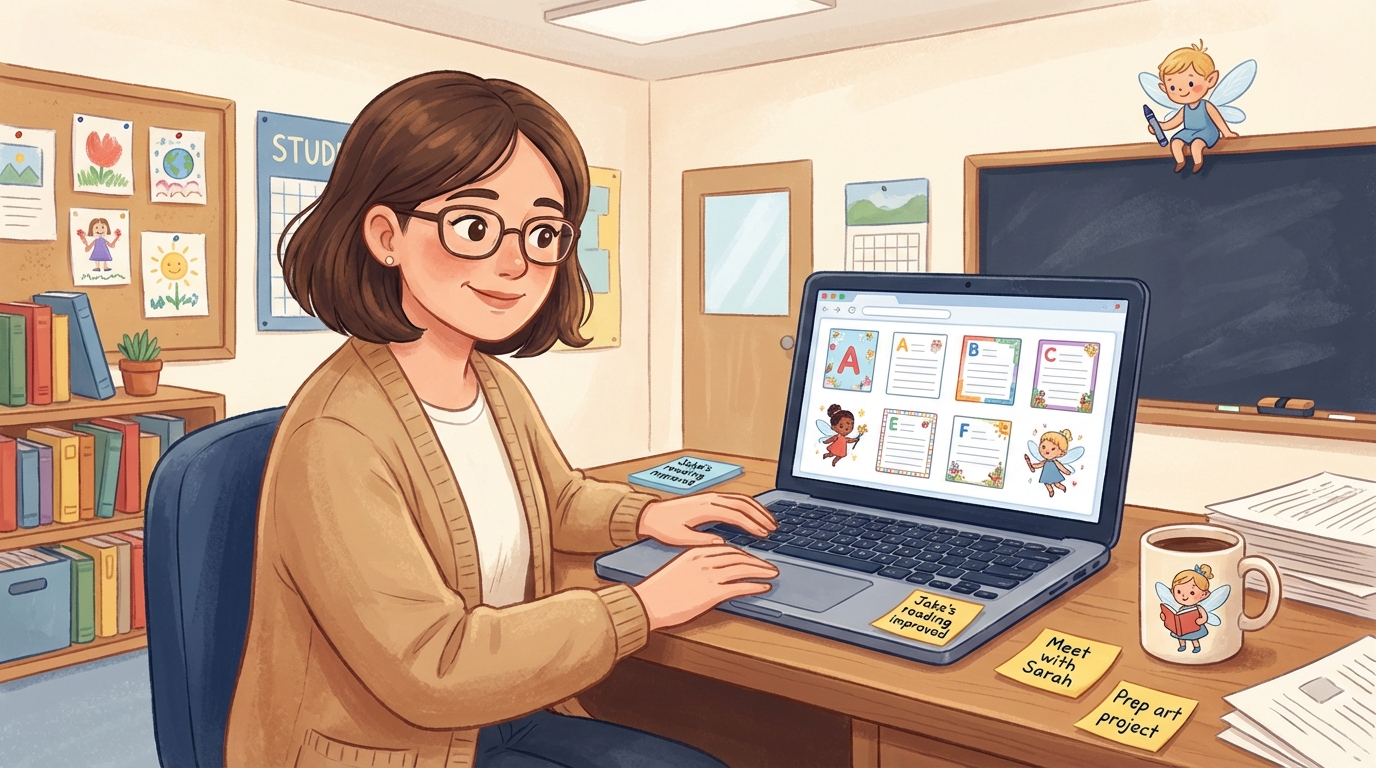
The biggest hurdle for teachers is time. Writing 30 unique, heartfelt letters by hand is nearly impossible during a busy school week. This is where modern tools like bulk letter generation change the game.
By using AI-assisted platforms designed for educators, you can maintain the high level of personalization students need without the burnout. You provide the "ingredients"—the student's name, the specific achievement, and the character—and the tool handles the narrative structure. This allows you to generate differentiated letters for various reading levels within the same class in a fraction of the time.
For example, you can spend 10 minutes entering brief notes from your observation journal into a CSV file, upload it, and produce a class set of letters from the Classroom Elf that each mention a unique student success. This ensures that the "magic" feels real because the details are authentic to each child's experience.
Growth Mindset Letter Ideas Across the School Year
The applications for these letters are limited only by your imagination. Here are a few ways to integrate various characters into your curriculum:
- STEM Challenges: Have a Leprechaun send a letter praising the "engineering grit" of a group that had to rebuild their bridge three times.
- Holiday Transitions: Use a letter from the Cat in the Hat during Dr. Seuss Day to encourage students who are finding rhyming or creative writing difficult.
- Physical Growth: A Tooth Fairy letter can beautifully bridge the gap between losing a tooth and "growing" a stronger brain, celebrating the courage it takes to handle change.
- End of Year: As the year closes, an End of Year Letter reflecting on a student's journey from "reluctant reader" to "book explorer" provides a lasting legacy of their success.
Measuring Impact: How to Know Your Letters Are Working
How do we know if these magical missives are actually moving the needle on student achievement? Look for these key indicators:
- Shifted Self-Talk: Listen for students using the language from the letters. Instead of "I'm bad at this," you might hear, "I just need a different strategy."
- Artifact Retention: Students who value the message will keep the letters. You’ll see them taped inside lockers, tucked into favorite books, or kept in "special folders" to be reread during tough assignments.
- Increased Risk-Taking: A healthy growth mindset leads to students being more willing to raise their hands even when they aren't 100% sure of the answer.
- Community Feedback: Parents often report a change in attitude toward homework. Resources on Reading Rockets emphasize that when school-to-home communication is positive and specific, student engagement soars.
Frequently Asked Questions
How often should teachers send growth mindset letters to students?
Aim for each student to receive 1-2 personalized letters per month, with additional class-wide letters for shared celebrations. This frequency maintains novelty and impact without overwhelming students or creating unsustainable teacher workload. Strategic timing around challenges and milestones matters more than rigid schedules.
What's the difference between growth mindset letters and regular praise notes?
Growth mindset letters specifically emphasize effort, strategies, and progress rather than innate ability or outcomes. They use process-focused language like "your revision approach" instead of "you're talented," and they're delivered through magical characters that make feedback feel special and externalized. Regular praise notes often inadvertently reinforce fixed mindset thinking.
Can growth mindset letters help struggling students who've given up?
Yes, especially when letters acknowledge specific small wins and reframe past struggles as learning data rather than failures. The magical character format helps resistant students receive encouragement without feeling patronized. Start with letters celebrating non-academic strengths to rebuild confidence, then gradually connect those strengths to academic challenges.
How do I personalize letters for 30 students without spending hours writing?
Use AI tools with bulk generation and CSV import features to maintain personalization at scale. Spend 10-15 minutes noting specific observations for each student, then input these details to generate individualized letters. The technology handles the writing while you provide the authentic, personal touches that make each letter meaningful.
What age range benefits most from growth mindset letters?
Elementary students (K-5) respond especially well because they're still developing self-concept and readily engage with magical characters. However, the approach can be adapted for middle school using age-appropriate characters or mentors. The key is matching the character and language complexity to developmental stage while maintaining the core growth mindset messaging.
By integrating growth mindset letters into your classroom, you aren't just giving a student a piece of paper; you are giving them a new lens through which to see themselves. When the "magic" of a character meets the "science" of mindset, students begin to believe that they truly are capable of anything—one letter at a time.
Ready to transform your classroom culture? Explore the Classroom Edition of The Magic Letter Box and start your 10-letter free trial today!
Turn this idea into printable classroom letters
Written by The Magic Letter Box
Creating magical moments for families through personalized letters and thoughtful parenting resources.