Tooth Fairy Letters That Comfort Scared Children
Write a Gentle Tooth Fairy Letter Tonight
The Magic Letter Box helps you create a personalized Tooth Fairy letter that speaks to your child's specific worries. Start with 5 free letters, then the Family plan is just $15/year for unlimited letters for up to 6 children.
Losing a first tooth is a major developmental milestone, but for many children, it is also a source of significant anxiety. While some kids wiggle their teeth with excitement, others view the process with genuine trepidation. As a parent, you want to preserve the magic of the Tooth Fairy, but you also need to support your child's emotional well-being. A personalized Tooth Fairy letter can be a gentle, reassuring tool in this transition, transforming a scary physical change into an empowering experience.
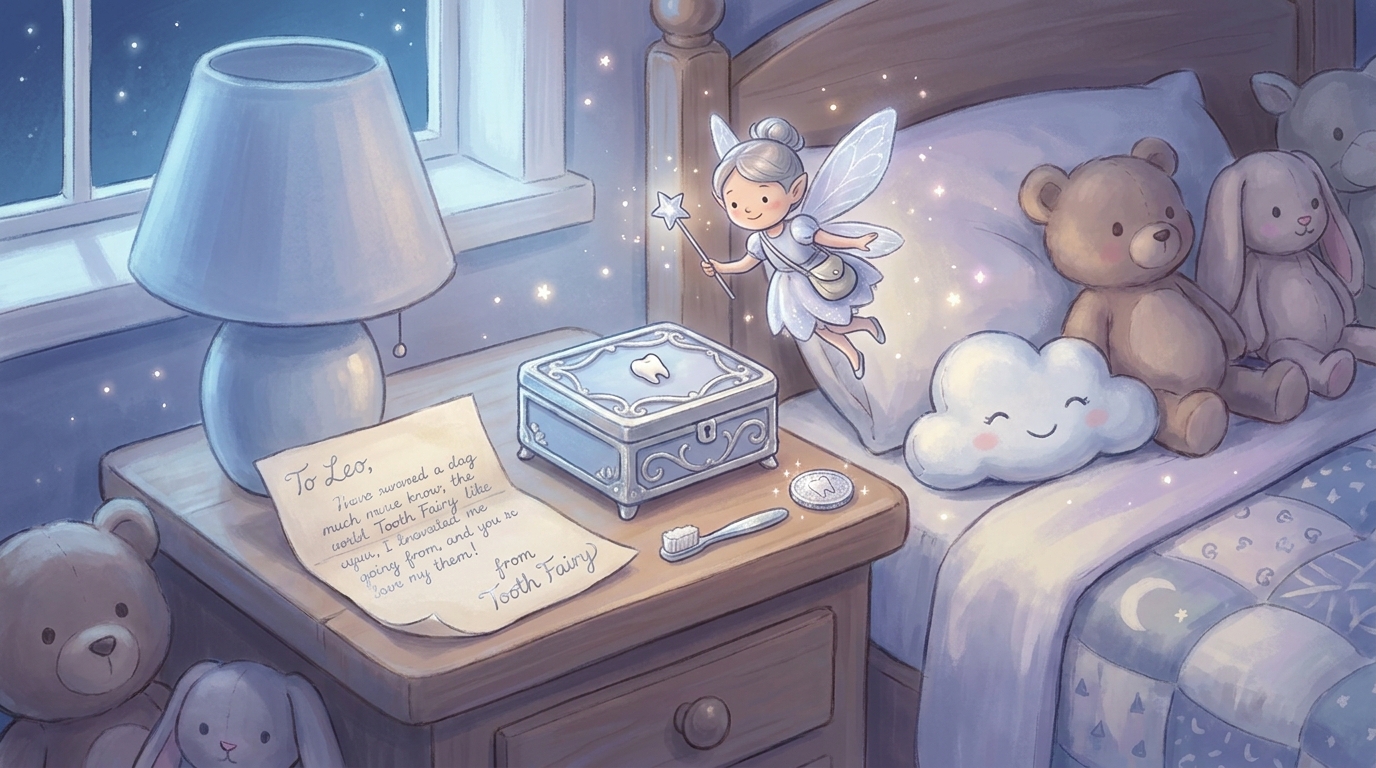
Why Some Children Fear Losing Teeth
To help a scared child, we must first understand the root of their anxiety. Young children are still figuring out how their bodies work, so a part simply "falling out" can feel unsettling.
Common fears include the physical sensation of a loose tooth, the sight of a little blood, and the loss of control over their own body. Furthermore, many children struggle with the concept of a "stranger" entering their bedroom at night. While the Tooth Fairy is a beloved figure in culture, to a literal-minded child, the idea of an unknown visitor while they sleep can trigger a "stranger danger" response.
Media portrayals and exaggerated stories from peers at school often amplify these concerns. Many childhood fears grow out of not knowing what to expect. When a child doesn't know exactly what to expect, their imagination fills in the gaps with worst-case scenarios. By using a letter to provide a clear, gentle narrative, you replace the unknown with a friendly, predictable story.
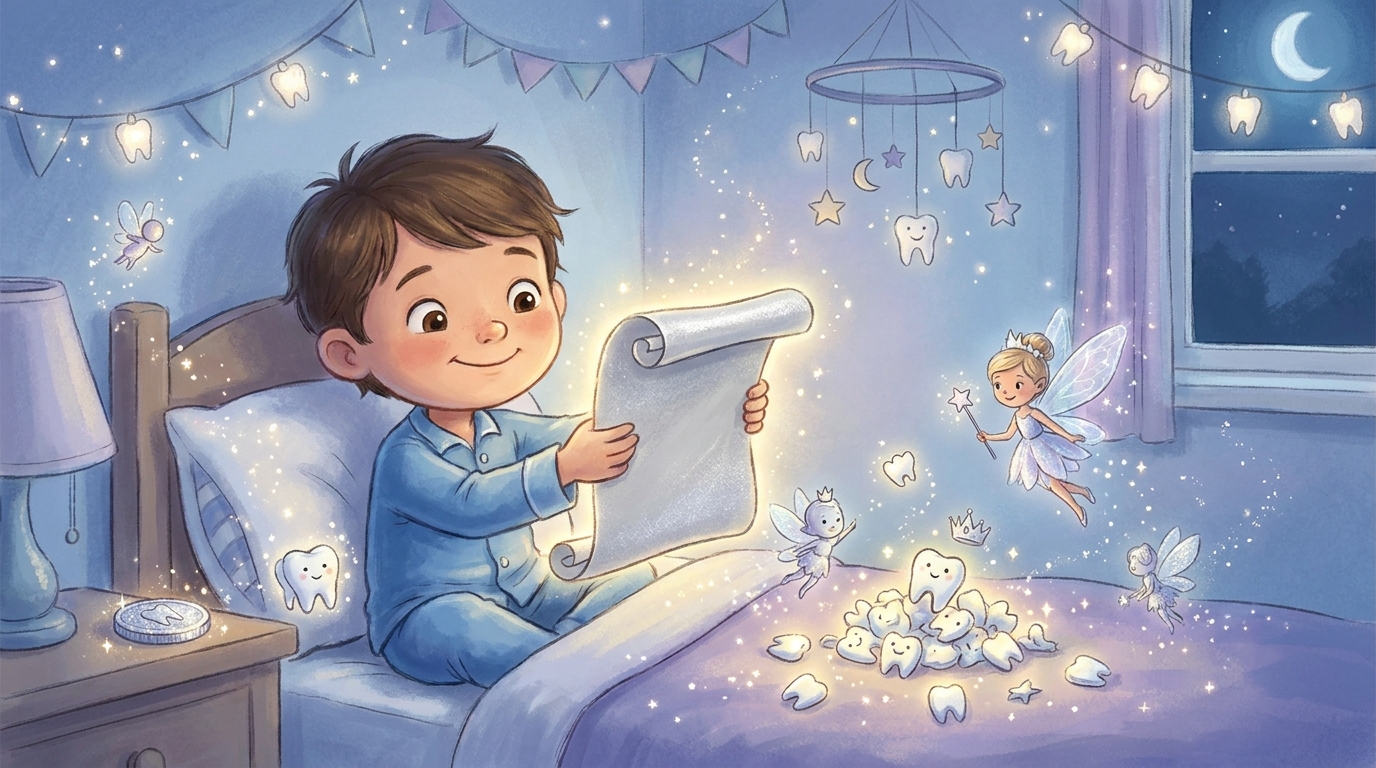
What Makes a Tooth Fairy Letter Comforting
A comforting Tooth Fairy letter avoids generic greetings and focuses on warm, gentle language. The goal is to acknowledge the child's bravery without minimizing their fear. If a child feels their fear is being dismissed, they may become more anxious. Instead, use phrases like, "I know this was a big step for you," or "It's okay to feel a little nervous about changes."
Predictability is the antidote to anxiety. Your letter should explain the Tooth Fairy's gentle nature. For example, instead of just saying "I came for your tooth," try: "I am as quiet as a butterfly and I only visit when you are sleeping peacefully. I move very softly so you can keep having your sweet dreams." This reframes the visit as a protective, gentle event rather than an intrusion.
For children who are particularly worried about the physical process, you can explain in a kid-friendly way that losing baby teeth is a healthy sign that their body is growing strong and making room for "grown-up" teeth.
Personalizing Your Tooth Fairy Letter for Anxious Children
Personalization builds trust. When the Tooth Fairy mentions a child's specific interest—like a favorite stuffed animal on their bed or a drawing they made—it creates a sense of familiarity that reduces the "stranger" element. If your child is worried about the tooth being "gone," the letter can explain that the tooth is going to a special place (like a fairy library or a sparkling castle) where it will be treasured.
For children who need a sense of control, the letter can offer choices. You might suggest they leave the tooth in a special "Tooth Box" on a bookshelf or in the hallway rather than under their pillow. This allows the child to set boundaries that make them feel safe while still participating in the magic.
The Tooth Fairy Letter Comfort Framework
When drafting a letter for a scared child, follow this four-step framework to ensure the message is emotionally supportive:
- Validation: Acknowledge their feelings first. "I saw how brave you were today, even though you felt a little bit worried."
- Reassurance: Address the specific fear. "My wings are made of silk, so I never make a sound when I fly by."
- Celebration: Highlight the milestone. "Losing your first tooth means you are growing up so beautifully!"
- Forward-Looking Excitement: Give them something to look forward to. "I can't wait to see your new, strong tooth grow in!"
Here is how those four steps can come together in one short letter:
Dear [Name],
I heard that losing your tooth felt a little scary today, and that is perfectly okay. Big changes can make anyone feel wobbly inside. I want you to know that I visit so softly, like a feather floating down, and I never wake anyone up. I only peeked in long enough to say hello to [Stuffed Animal] and tuck your tooth into my sparkly pouch. Losing a tooth means your body is growing strong, just like it should. Your new tooth is already getting ready, and I can't wait to see your brave smile!
With gentle wishes,
The Tooth Fairy
For more wording ideas, see our guide on what to write in a Tooth Fairy letter.
If your child is extremely anxious, don't wait until the tooth is gone. You can find more advice on this in our guide for the first lost tooth. Sending a "pre-visit" letter can demystify the process before the tooth even falls out.
Beyond the First Letter: Building Confidence Over Time
Anxiety rarely disappears overnight, but it can be managed through consistency. Subsequent letters should reference previous visits to build a narrative of success. In the second letter, the Tooth Fairy might say, "I remember how brave you were last time, and look at you now—another tooth!"
As the child becomes more comfortable, you can gradually shift the focus from reassurance to celebration. This creates a "bravery portfolio" for the child. You can even keep these letters in a special scrapbook to show them how much they’ve grown. For unique situations, such as when a child loses two teeth at once, you can adapt the narrative using our tips for multiple teeth.
Creating Your Tooth Fairy Letter in Minutes
Parents are often busy, and trying to find the "perfect" words at 9:00 PM can be stressful. The Magic Letter Box is designed to simplify this process. By inputting your child's specific fears—whether it's blood, the dark, or the "gap" in their smile—the tool generates a personalized, magical response that hits all the right emotional notes.
Start with 5 free letters; the Family plan is $15/year after that. Pairing these letters with preparation activities, like reading books about the Tooth Fairy or picking out a special tooth pouch, creates a comprehensive support system for your child.
Frequently Asked Questions
When should I give my child a tooth fairy letter if they're scared?
Consider giving a letter before the tooth falls out if your child is expressing significant anxiety. This 'introduction letter' from the Tooth Fairy can explain what to expect and address specific fears ahead of time. For moderate anxiety, a letter immediately after the first tooth loss works well to reinforce the positive experience.
How do I personalize a tooth fairy letter for my anxious child?
Include your child's name, reference their specific fears, and incorporate their interests to create familiarity. If they love dinosaurs, the Tooth Fairy might mention traveling past their favorite dinosaur on the way. Address their particular worry directly - whether it's pain, nighttime visitors, or body changes - with specific, age-appropriate reassurance.
Can I use tooth fairy letters for multiple tooth loss events?
Absolutely. Subsequent letters can reference previous visits and celebrate growing confidence. Early letters focus more on reassurance while later ones emphasize celebration and pride in their bravery. This progression helps children see their own growth and typically reduces anxiety with each tooth lost.
By taking the time to address your child's fears through the magic of storytelling, you are doing more than just keeping a tradition alive—you are teaching them that they are brave enough to handle change. Ready to write your child's letter? Create your first one free at The Magic Letter Box.
Written by The Magic Letter Box
Creating magical moments for families through personalized letters and thoughtful parenting resources.