Tooth Fairy Letter for First Lost Tooth: Everything Parents Need to Know
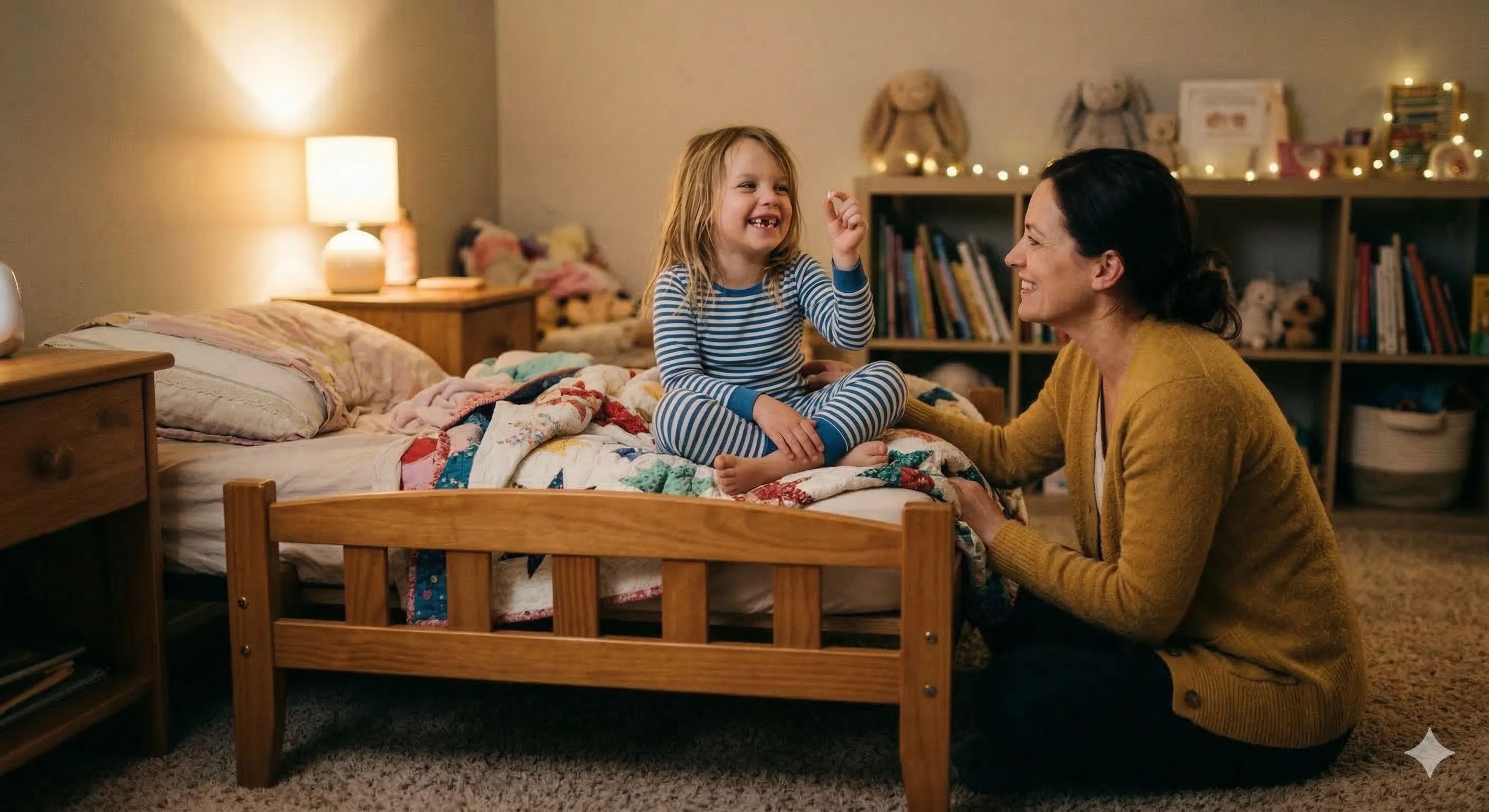
It always happens at the worst time — bath time, right before bed, during dinner — and suddenly you have a child with a gap-toothed grin holding a very small tooth and looking up at you with enormous eyes. Tonight, the Tooth Fairy comes for the first time.
The panic is real. Do you have something to leave? What is the Tooth Fairy supposed to say? And how is this letter supposed to feel different from every other Tooth Fairy visit that follows?
This guide answers all of it — what the first tooth letter should include, how to personalize it so your child knows she was actually there, sample excerpts by age, delivery tips that actually work, and how to turn tonight into a tradition that lasts for years.
✨ Need a Letter Ready Tonight?
The Magic Letter Box creates personalized Tooth Fairy letters in under two minutes — customized with your child's name, the specific tooth they lost, their age, and even what makes them proud. Start free with 5 letters, or unlock unlimited letters for a full year for just $15. Hundreds of designs, zero blank-page panic.
What's In This Guide
- Why the First Lost Tooth Deserves a Special Letter
- What the Tooth Fairy Should Say for a First Lost Tooth
- How to Personalize the First Tooth Letter
- Tooth Fairy Letter Delivery — Making the First Visit Feel Real
- First Lost Tooth Traditions to Start Tonight
- What to Write in a Tooth Fairy Letter for Different Ages
- Frequently Asked Questions
Why the First Lost Tooth Deserves a Special Letter
Not all lost teeth are equal — at least not from the Tooth Fairy's perspective.
Losing a first baby tooth is a genuine developmental milestone. It signals that your child's permanent adult teeth are on their way in. For children ages 5 to 7, this is often the first time their body has done something that surprised them — something that was slightly scary, slightly exciting, and completely outside their control.
Many children are nervous about losing teeth. The wobble goes on for weeks. There's often a moment of tears or genuine fear when it finally comes out. A letter that acknowledges that bravery — specifically — lands very differently than a generic "thank you for the tooth" note.
There's also something structurally important about the first tooth letter: it establishes the relationship. The Tooth Fairy now knows your child's name. She's met them. Every future tooth exchange builds on this first visit — which means getting the first one right sets up years of magic to come.

What the Tooth Fairy Should Say for a First Lost Tooth
The tone of a first-tooth letter is different from every letter that follows. This is an introduction. The Tooth Fairy hasn't met your child before — and she should say so.
A strong first-tooth letter typically covers five things:
- Acknowledge that this is the first visit — "I've had my eye on that tooth for quite some time" or "I've been waiting for your first tooth for a while now." This signals she knew the moment was coming.
- Confirm she knows them by name — She arrived here specifically, not by accident. She knows who this child is.
- Explain what happens to the tooth — Children are curious about where their tooth goes. Keep it whimsical: a first tooth goes to a very special place (a "memory shelf" in the Tooth Fairy's collection, or the foundation of a star, or a tiny crown for a baby fairy). Pick the mythology that feels right for your family and stay consistent.
- Celebrate the bravery — Losing a tooth is often a little scary. Naming that bravery specifically ("I heard you were a little nervous, but you were so brave") validates the child's real experience.
- Promise to return — This is the letter that starts the tradition. Close with something like "I'll be back whenever you're ready" or "Your smile and I are just getting started."
Here are three sample excerpts showing how this can sound at different warmth levels:
How to Personalize the First Tooth Letter
Generic letters exist everywhere — the magic is in the specificity. When a child reads a detail that proves the Tooth Fairy actually knows them, the wonder clicks into place in a way that a beautifully designed but generic letter simply cannot achieve.
Here are the details that make the biggest impact:
- Which tooth it was. The bottom front teeth go first in most children. Naming it ("your bottom left tooth" or "the little one that had been wiggling for three weeks") shows the Fairy was paying attention.
- How the tooth came out. Did it wiggle for weeks before finally letting go? Did it fall out at school? At the dinner table? Did a sibling help? This is story gold — use it.
- One thing the child is proud of right now. A sport they love, a book they just read, a new friend they made. The Tooth Fairy has been watching, and she noticed.
- Their age and grade. "A 6-year-old in first grade" is a detail that makes the letter feel impossible to have been written by a parent.
- Whether they were brave or nervous. Name it honestly — nervous and brave aren't opposites, and children respond powerfully to having their real feelings seen.
Tooth Fairy Letter Delivery — Making the First Visit Feel Real
The most beautifully written letter loses half its power if the delivery doesn't hold up. Logistics matter.
Getting the Letter Under the Pillow
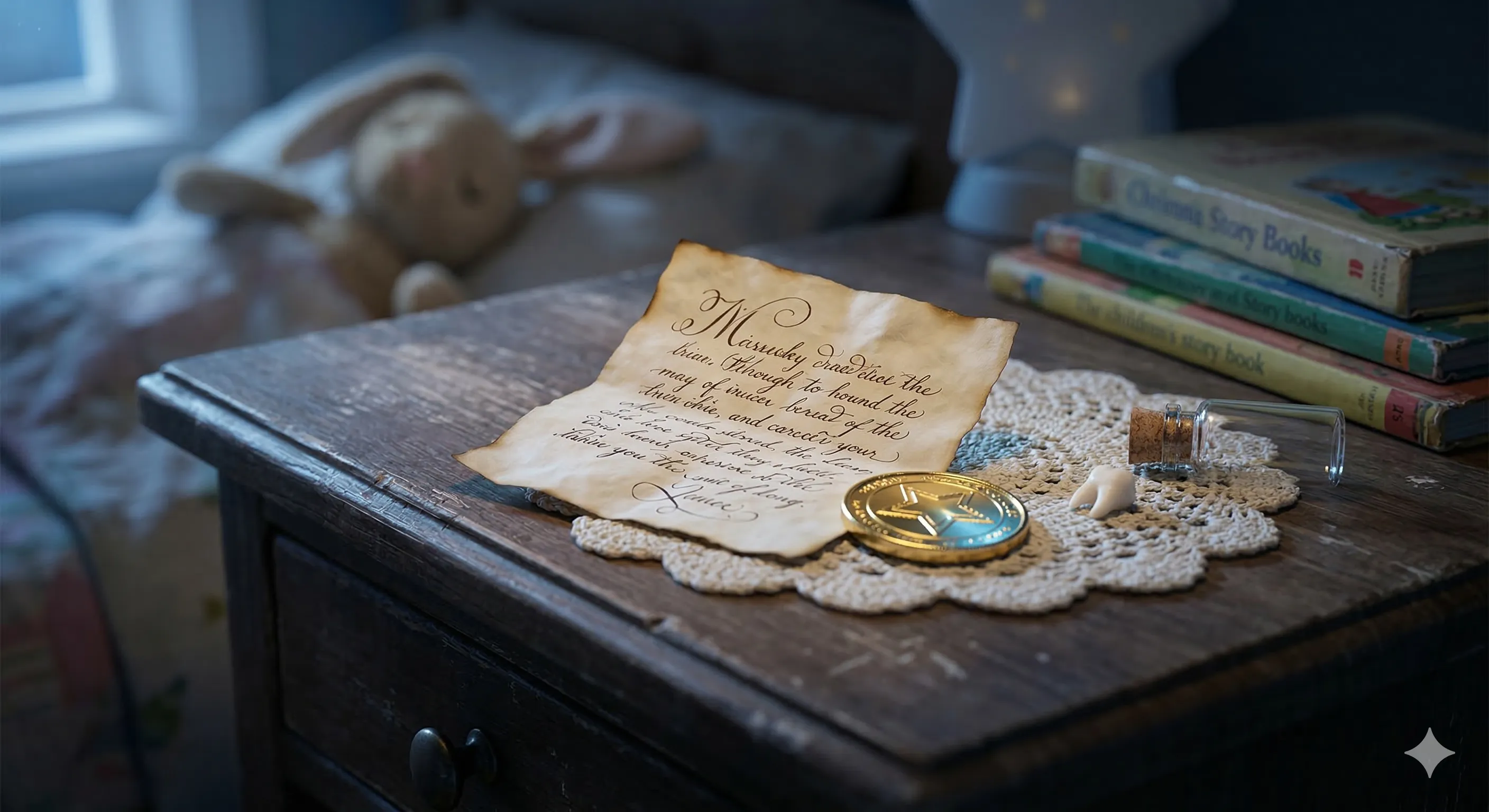
The classic method works — but only if the child is a deep sleeper. Gently slide the letter (and any coins or dollar) under the edge of the pillow while the child is fully asleep. Have it folded small enough that it doesn't crinkle loudly. Move slowly.
Better Drop Spots for Light Sleepers
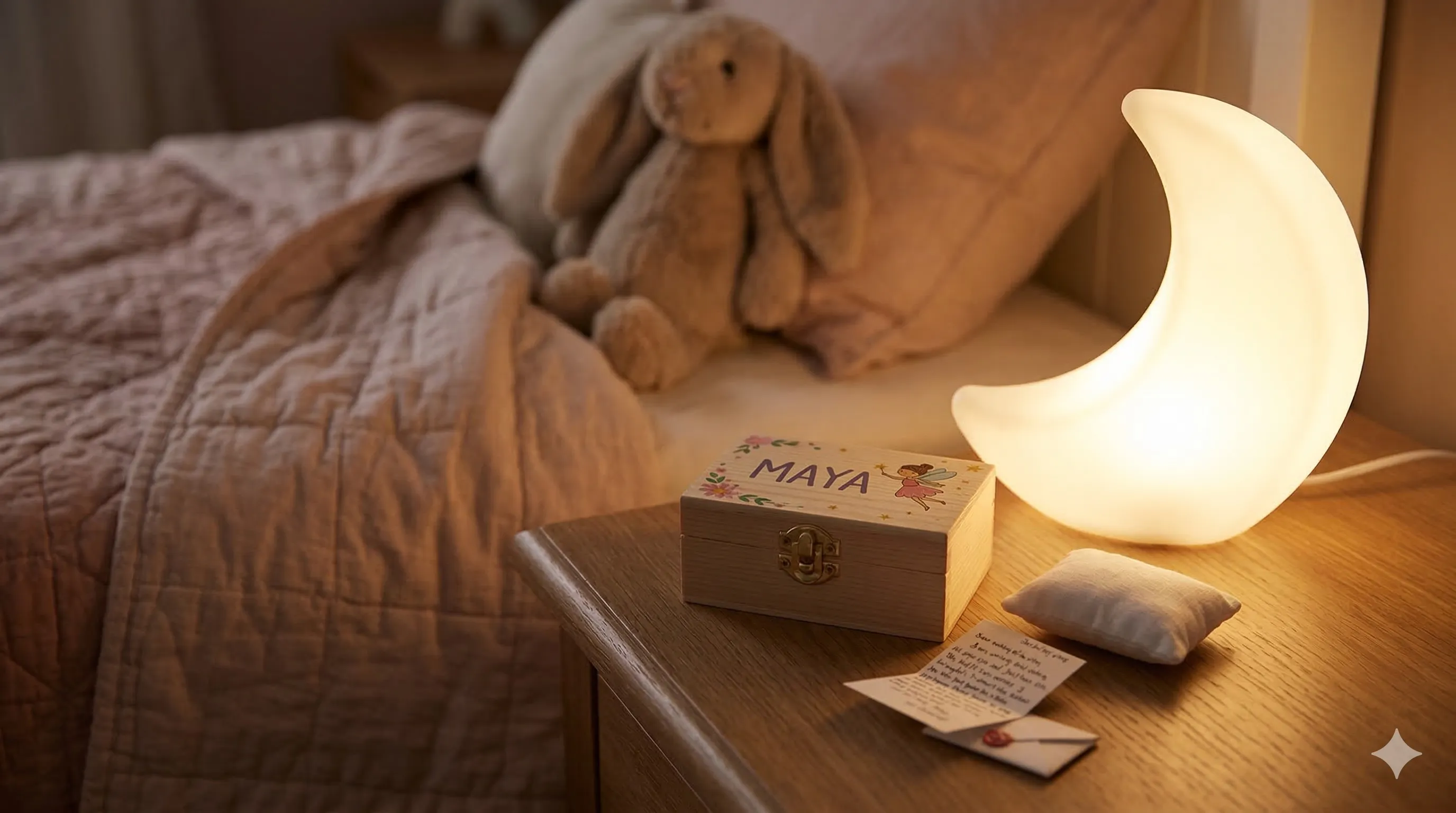
- A small Tooth Fairy box or pillow on the nightstand (the tooth goes in, the letter comes out)
- A tiny envelope tucked under the bedroom door
- Inside a small glass or cup set out before bed specifically for the Fairy's visit
- On the bathroom counter beside where they brush their teeth — thematic and practical
First-Tooth Bonus Touches
Because this is the first visit, consider a small extra detail that won't be expected every time:
- A single gold or silver coin (a Sacagawea dollar or a Susan B. Anthony coin reads as more "fairy" than paper bills)
- A tiny "First Tooth Certificate" that can go in the baby book
- A faint fairy-sized "footprint" on the letter — press a pinky fingertip to an ink pad and make a tiny smudge, or use a toothpick dipped in metallic paint
- Glitter sprinkled very lightly on the envelope (a little goes a long way — vacuum is your friend)
First Lost Tooth Traditions to Start Tonight
The letter itself is the centerpiece, but the rituals around it extend the magic well beyond the morning it's found. Here are traditions worth starting on night one:
- The Tooth Fairy Box or Pillow. A dedicated small container or pillow just for lost teeth makes the exchange feel intentional. Children love having an "official" thing that belongs to this ritual. Look for wooden boxes with the child's name, or sew a simple felt tooth-shaped pocket that hangs on the door.
- The Gap-Toothed Photo. Take a picture of that first missing-tooth smile before bed — it's gone faster than you think, and this one is different from all the others. Print it for the baby book alongside the letter.
- The Tooth Chart. Print a simple diagram of baby teeth and mark each one when it falls out, along with the date and any memorable detail. Some families include a small note about what the Tooth Fairy left each time. It's a quiet keepsake that children love reviewing years later.
- A First-Tooth Bedtime Book. Reading a tooth-themed picture book together before the Fairy's first visit makes the evening feel ceremonial. Throw Your Tooth on the Roof by Selby Beeler is a wonderful choice — it covers global tooth traditions, which naturally opens up conversation about how different families celebrate this same milestone.
What to Write in a Tooth Fairy Letter for Different Ages
The right tone depends heavily on your child's age and where they are in the "do I actually believe this?" spectrum. Here's how to calibrate:
Age 5 — Pure Magic, Keep It Simple
At 5, children are fully in the world of magical thinking. The letter should be short, gentle, and full of wonder. Long words and complex sentences aren't necessary — warmth and specificity are everything.
Age 6–7 — More Story, More Detail
At this age, children want evidence. They're testing the story. More details about their real life — school, a friend, something they did recently — make the letter feel airtight. The Fairy's voice can be a little more playful and expressive.
Age 8–9 — Lean Into the Evidence
Older children who are starting to wonder need a letter that feels impossible to have been faked. This is where maximum personalization earns its keep — the more specific the detail, the more the letter does its job. Lean into the logic of the mythology, explain how she found them, reference something they care about that a parent "couldn't have known."
Frequently Asked Questions
What does the Tooth Fairy say for the first tooth?
A first-tooth letter should be different from all subsequent letters because it introduces the relationship. The Fairy should acknowledge this is her first visit to this specific child, use their name prominently, celebrate the bravery of losing a tooth (which is often scary for young children), explain in a whimsical way what she'll do with the tooth, and close with a promise to return. Generic letters miss the most important element: this is an introduction, not just a receipt.
Should the Tooth Fairy letter be different for the first tooth?
Yes — and meaningfully so. Subsequent tooth letters can be shorter and more routine. The first letter sets the tone for the entire tradition. It should be longer, warmer, more personal, and more ceremonial. Think of it as the foundation letter that all future visits reference. Some families even have the Tooth Fairy mention in later letters: "I still remember the night of your very first tooth..."
How much does the Tooth Fairy leave for the first tooth?
According to a widely cited annual survey, the average Tooth Fairy payout in the U.S. hovers between $3 and $5 per tooth, with first teeth often receiving a bit more as a "bonus" for the milestone. Whatever you decide, the key is to stay consistent so later teeth don't feel like a demotion. Some families give coins only (which feel more "fairy-like"), others give dollar bills, others include a small non-monetary token for the first tooth specifically.
What do you write in a note from the Tooth Fairy?
The five essentials: (1) the child's name, early and prominently; (2) acknowledgment of which tooth it was and how it came out; (3) what the Fairy will do with the tooth — give it a whimsical destination; (4) something specific about the child that proves she knows them; (5) a warm, hopeful closing that sets up the next visit. Keep the tone warm and personal rather than formal, and resist the urge to make it too long — one page handwritten or printed is ideal.
How do I make the Tooth Fairy's first visit special?
Beyond the letter itself, the ritual matters. Set up a dedicated Tooth Fairy box or pillow before bed so the exchange has a proper "official" spot. Take a photo of that first gap-toothed smile. Consider starting a Tooth Chart to track every tooth that follows. And if time allows, read a tooth-themed book together before sleep — it frames the whole night as a ceremony rather than a transaction. The Fairy's letter is the centerpiece, but the surrounding ritual is what children remember as a feeling.
The Tradition Starts Tonight
The first lost tooth is the beginning of a long story. Over the next 6 to 8 years, your child will lose all 20 baby teeth — and each one is a small ceremony, a quiet reassurance that they're growing exactly the way they should be. The letter you write tonight is the one they'll remember most.
It doesn't have to be perfect. It just has to feel real. Specific. Meant for them and no one else.
✨ Create Your Child's First Tooth Fairy Letter
Don't start from a blank page tonight. The Magic Letter Box generates a fully personalized Tooth Fairy letter in under two minutes — built around your child's name, age, which tooth they lost, and what makes them uniquely them. Start free with 5 letters, or get unlimited letters for a full year for just $15, with hundreds of designs and customization options. The Fairy is waiting.
Written by The Magic Letter Box
Creating magical moments for families through personalized letters and thoughtful parenting resources.