Leprechaun Letters with Rainbow Activities: Magical St. Patrick's Day
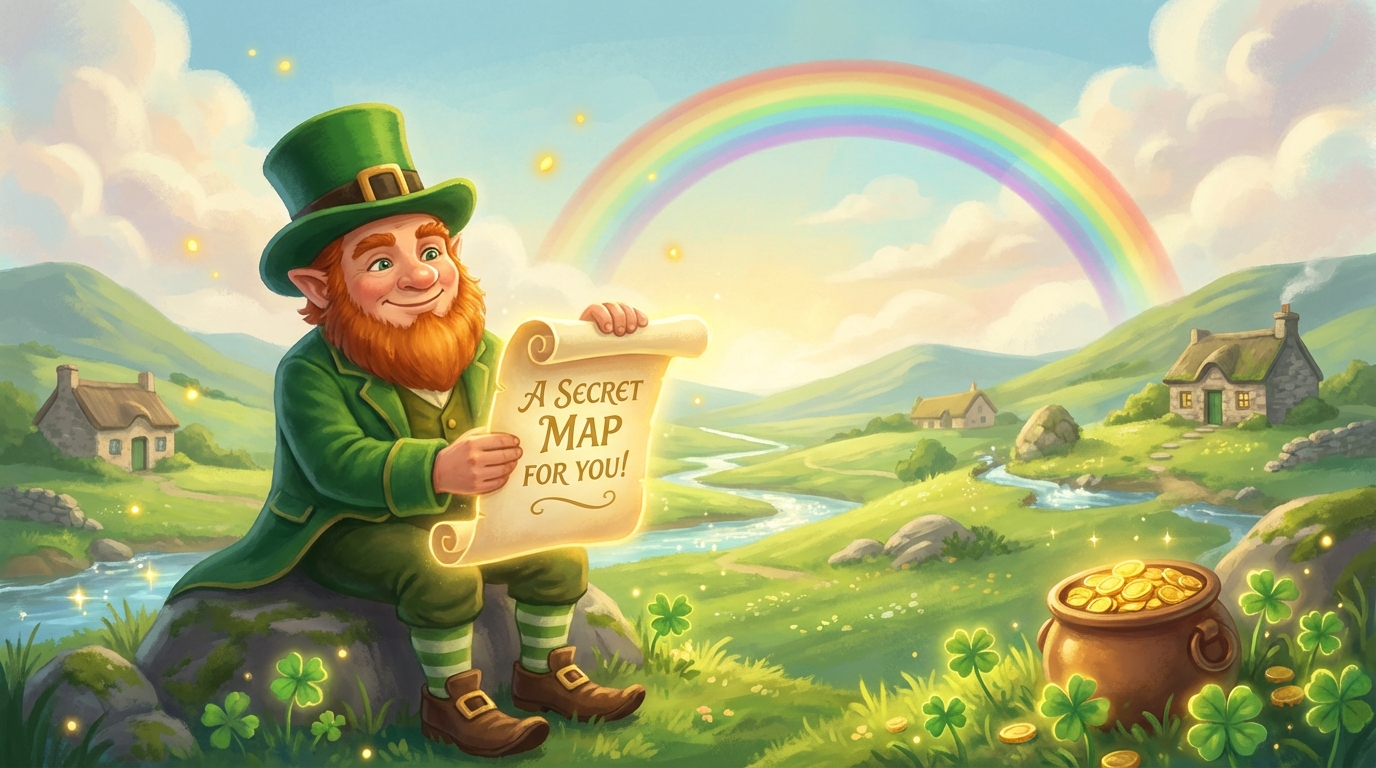
Why Leprechaun Letters Make Rainbow Activities More Magical
As educators and parents, we often find ourselves searching for the next great craft or activity to keep children engaged during seasonal holidays. On St. Patrick's Day, the go-to is often a rainbow craft. However, without a narrative anchor, even the most vibrant rainbow painting is just another piece of paper to be sent home in a backpack. The secret to transforming a simple craft into a lifelong memory lies in the power of storytelling.
Psychologically, children engage more deeply when activities have a story-driven purpose. According to child development research on narrative-based learning, children retain information and instructions up to three times longer when they are presented within a narrative framework. A personalized leprechaun letter serves as that framework, providing the "why" behind the work. Instead of simply sorting colored rice, the child is now "helping a leprechaun recover lost gold from a shattered rainbow." This shift from passive participation to active mission-based engagement is profound.
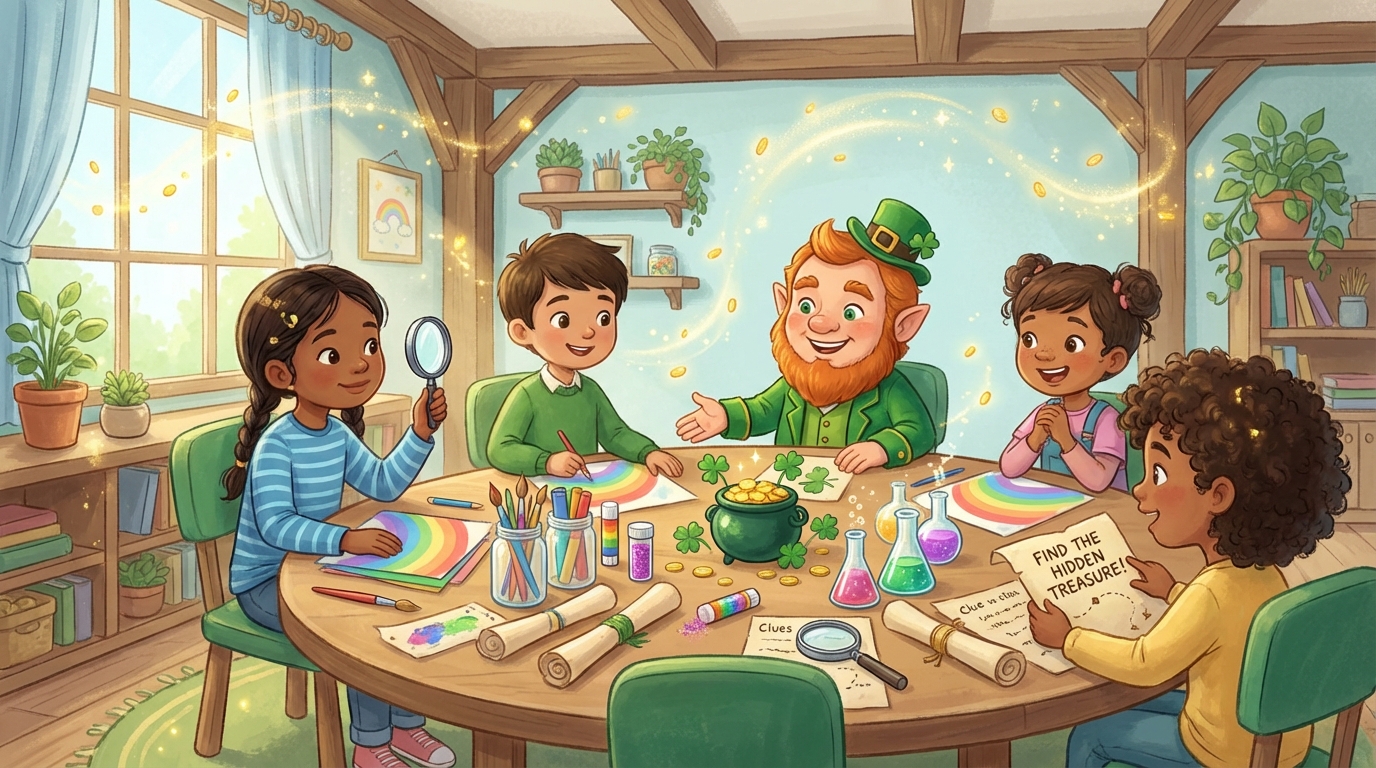
Consider the difference in a classroom setting. In Scenario A, a teacher announces it is time to make a rainbow suncatcher. In Scenario B, the teacher "finds" a tiny, glitter-dusted letter on the windowsill from a leprechaun named Lucky. The letter explains that the leprechaun’s rainbow has lost its glow and he needs the students to create new ones to help guide him back to his pot of gold. In the second scenario, student focus is immediate, and their creative investment is significantly higher because they are part of a magical mission.
Beyond the magic, there is a strong literacy connection. Reading a letter from a "real" leprechaun encourages reading comprehension and the ability to follow multi-step instructions. When a letter says, "First, find the red ribbon, then seek out the orange flower," children are practicing essential sequential processing skills without even realizing they are learning.
Create Classroom Magic in Minutes
Teachers love The Magic Letter Box Classroom Edition! Upload your roster, choose a template, and generate personalized letters for your entire class at once. 10 free trial letters, then just $25/year for unlimited letters for up to 35 students!
Age-Appropriate Rainbow Activities to Pair with Your Leprechaun Letters
To keep the magic alive, the activities must match the developmental stage of the child. A letter that is too complex for a preschooler or too simple for a fifth-grader will break the spell. Here is how to tier your rainbow adventures:
Preschool (Ages 3-5): Sensory Exploration
For the youngest learners, focus on tactile experiences. A popular activity is the Rainbow Rice Sensory Bin. Prepare a bin with rice dyed in every color of the rainbow. Hide small plastic gold coins or shamrock shapes inside.
The Letter Connection: The leprechaun writes to explain that he was running so fast to hide from a cat that he tripped and spilled his gold into a "magic rainbow cloud" (the rice). He needs the child’s small, clever hands to find the coins.
Early Elementary (Ages 5-8): Problem Solving
At this age, children love a challenge. A Rainbow Scavenger Hunt is the gold standard. Place color-coded clues around the room or house, each leading to the next color of the rainbow.
The Letter Connection: The letter acts as the starting point. "I've hidden seven clues, one for every color of my coat's favorite bridge! Start where the RED apples grow (the kitchen/lunch area) to find your first surprise." This builds anticipation and encourages movement.
Upper Elementary (Ages 8-11): STEM Challenges
Older children might be skeptical of "magic," but they love science. Use a Rainbow Density Jar experiment using sugar water with different concentrations to layer colors, or the classic Skittles and warm water experiment.
The Letter Connection: Frame the experiment as "Leprechaun Chemistry." The letter might challenge them: "I've heard you are quite the scientist. Can you prove that rainbows are made of more than just light? Use these magic candies to show me a liquid rainbow!"
Creating the Perfect Leprechaun Letter for Rainbow Adventures
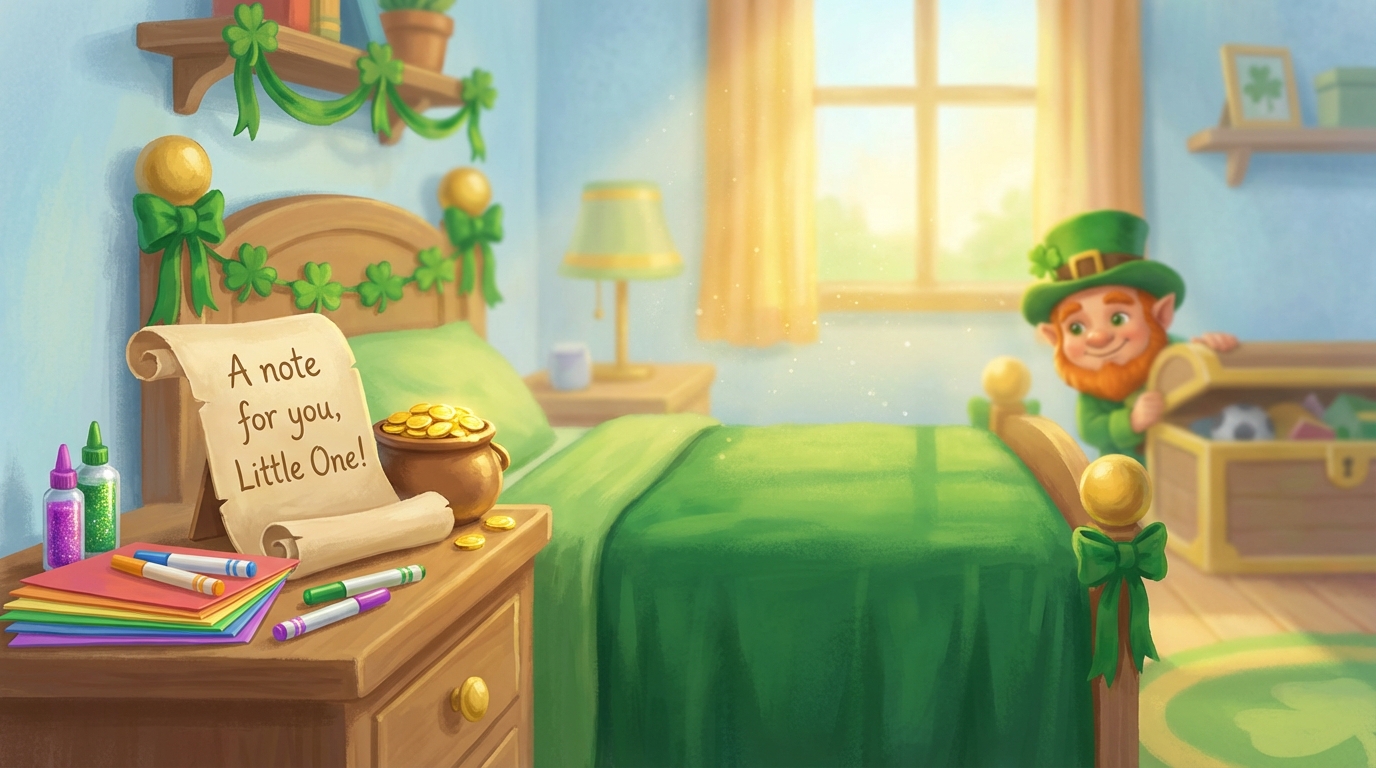
Writing a leprechaun letter is an art form that balances mischief with kindness. While the history of St. Patrick's Day tells us leprechauns can be solitary and cranky, for children, we want them to be whimsical tricksters who are ultimately friendly.
The essential elements of a successful letter include:
- The Greeting: Use a fun, Irish-inspired name like Finnegan O'Flaherty or Seamus McSnicker.
- Personalization: Mention a specific recent accomplishment. "I saw how hard you practiced your math facts this week!" is much more impactful than "You are a good student."
- The Activity Setup: This is where you bridge the gap between the story and the rainbow activity. Explain exactly what the leprechaun needs or has hidden.
- The Closing: A magical sign-off that leaves them wanting more, perhaps mentioning they'll see them again next year.
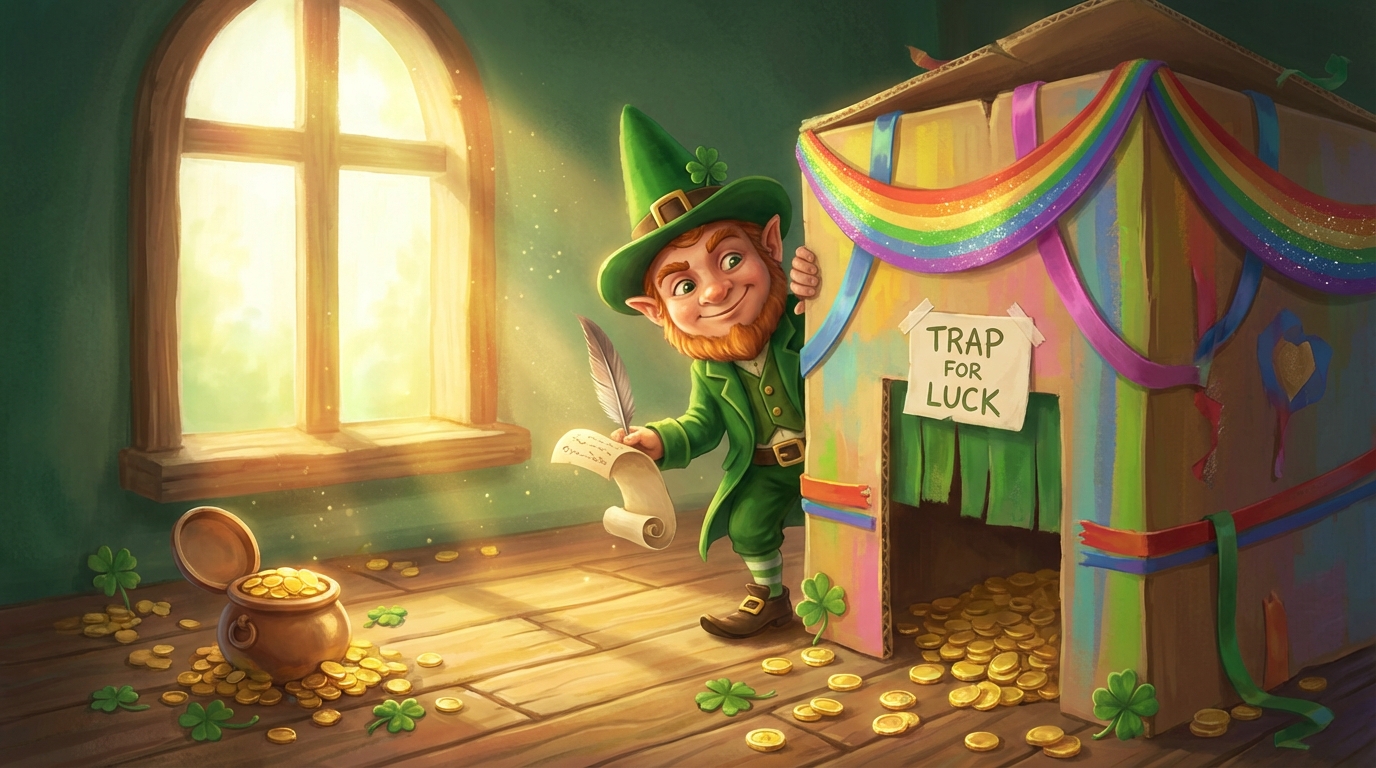
When writing, keep the tone light. Use phrases like "By the beard of a goat!" or "Top of the morning to ya!" to establish the character. If you are struggling with what to say after a leprechaun visit, you can find inspiration in our guide on leprechaun trap letter responses.
Rainbow Activity Ideas with Letter Integration
To truly make the activities meaningful, the letter must be the catalyst. Here are four specific ways to integrate letters with rainbow activities:
1. The "Fix the Rainbow" Craft
Setup: 15 minutes. Materials: Cotton balls, construction paper strips, glue.
Letter Connection: The leprechaun explains that a gust of wind blew the colors off his rainbow. He has left the "raw materials" and needs the child to glue them back together so he can cross the sky to his home in Ireland.
2. The Skittles Science Experiment
Setup: 5 minutes. Materials: Skittles, white plate, warm water.
Letter Connection: The letter claims that leprechauns use "melted rainbows" to dye their clothes. It asks the child to see if they can extract the colors from the "magic stones" (Skittles) using a splash of warm water.
3. The Pot of Gold Treasure Hunt
Setup: 20 minutes. Materials: Seven colored envelopes, gold chocolate coins.
Letter Connection: The letter provides the first clue. Each subsequent clue is found at a station colored like the rainbow (Red, Orange, Yellow, Green, Blue, Indigo, Violet). The final station holds the "pot of gold."
Related: Check out how to structure similar hunts in our Easter Bunny scavenger hunt guide.
4. Rainbow Response Letters
Setup: 10 minutes. Materials: Paper, markers.
Letter Connection: The leprechaun asks the child to draw him a picture of the most beautiful rainbow they've ever seen because he's feeling a bit homesick for the hills of St. Patrick's Ireland.
Classroom Magic: Bulk Leprechaun Letters for Teachers
For teachers, the prospect of writing 30 personalized letters can be daunting. This is where the Classroom Edition of The Magic Letter Box becomes an essential tool. Instead of generic printouts, teachers can use a CSV roster import to generate unique letters for every student in minutes.
This allows for a shared classroom narrative—perhaps a leprechaun visited the classroom and turned the chairs upside down—while still maintaining individual connections. One student's letter might praise their kindness to a peer, while another's mentions their great progress in reading. This balance creates a sense of community magic. Everyone is in on the story, but everyone is seen individually by the "leprechaun."
To enhance the experience, create a "Leprechaun Evidence Board" in the hallway. Post the rainbow crafts alongside the letters the students received. This not only documents the fun but reinforces the literacy work involved in the day. For more classroom-specific ideas, see our Teacher's Guide to Leprechaun Letters.
Making Leprechaun Letters and Rainbow Activities an Annual Tradition
The true power of these activities is found in repetition. When a child sees that same green envelope or glittery handwriting year after year, it builds a sense of wonder that stays with them. These become "emotional bookmarks"—memories they will recall fondly even as adults.
As children grow, the lore can evolve. For a toddler, the leprechaun might just leave a rainbow sticker. For a ten-year-old, the leprechaun might leave a complex cipher that requires mathematical solving to find the rainbow treasure. You can even reference previous years in the letters: "I remember when you were just a wee sprout and built me that trap out of a shoebox! This year, I see you've moved on to building robots!"
For families with multiple children, the leprechaun can leave one group letter for a shared rainbow hunt, with individual "P.S." notes for each sibling. This fosters cooperation and shared excitement, making St. Patrick's Day a highlight of the spring season.
Frequently Asked Questions
Have the letter introduce the activity as part of the leprechaun's story - for example, "I've scattered rainbow clues around your house to lead you to a special surprise" or "I need your help fixing my rainbow - can you create one using these materials I left?" The letter provides the "why" that makes the activity meaningful rather than random.
Leprechaun letters work beautifully for ages 3-11, with activity complexity adjusted by age. Preschoolers love simple sensory rainbow activities, early elementary enjoys treasure hunts and crafts, while upper elementary engages with STEM-based rainbow challenges. The letter provides age-appropriate context for each activity level.
Absolutely - The Magic Letter Box's Classroom Edition lets teachers generate personalized leprechaun letters for up to 35 students simultaneously using CSV roster import. Each letter can reference individual student strengths while coordinating a class-wide rainbow activity, creating shared magic with personal touches.
Written by The Magic Letter Box
Creating magical moments for families through personalized letters and thoughtful parenting resources.